

Did you know: Breeding season begins around Valentine’s Day
Feb 13, 2026
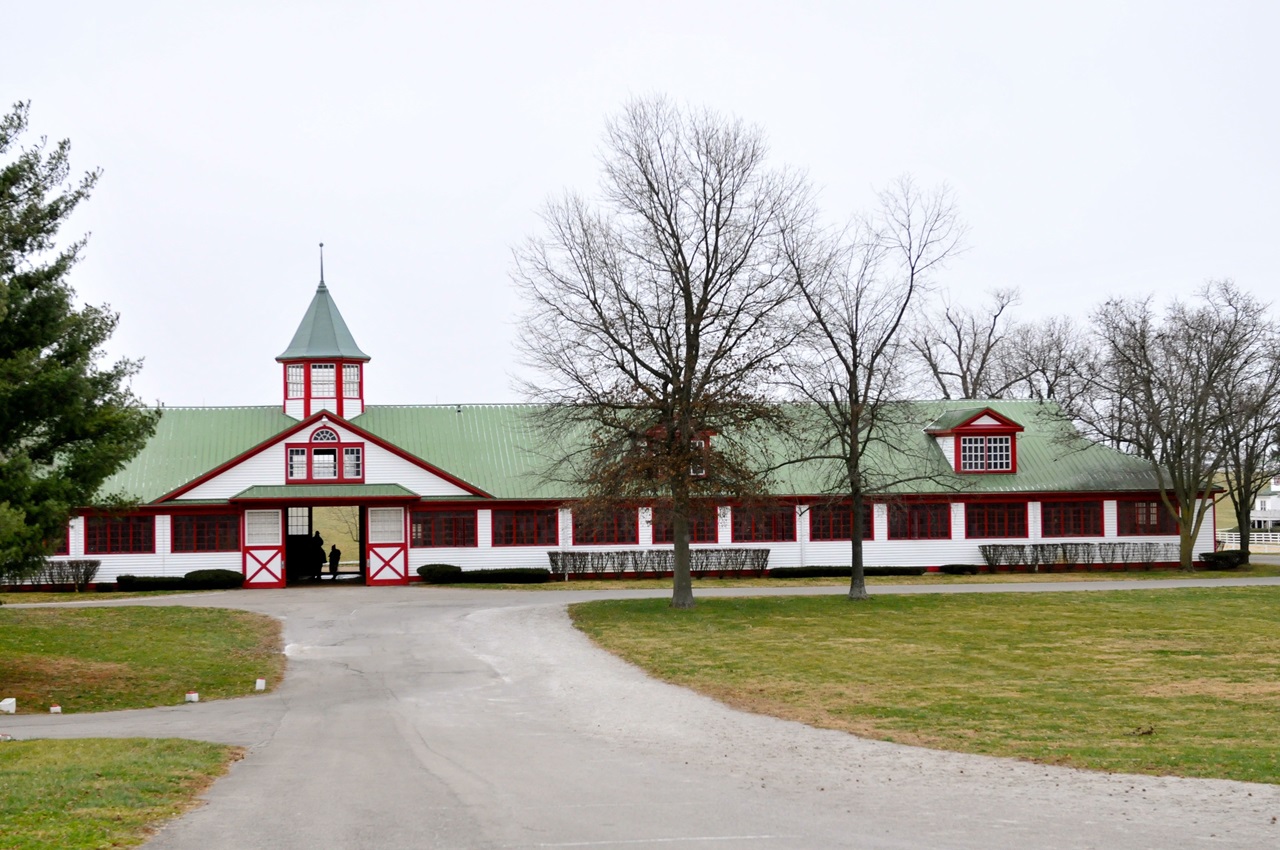
Calumet Farm, breeder of a record 10 Kentucky Derby winners (Photo from Wikimedia Commons)
Valentine’s Day is a fascinating topic in history and folklore. Both its name and its date commemorate a Christian martyr from the time of the Roman Empire, when the Church was subject to severe persecution.
St. Valentine was a priest who gave his life for the faith on Feb. 14 in the year 269 or 270. (In fact, there’s more than one martyr named St. Valentine attested on Feb. 14; we’ll stick with the one most often cited.) His memorial was observed on the anniversary of his martyrdom.
But this feast day also became associated with romantic love. You can find different theories to account for this development – pious legends about the saint himself, the Christianization of an ancient Roman festival, and the medieval poet Chaucer, who explicitly connected Valentine’s Day to the time when birds paired up.
It’s also traditionally the time when the Thoroughbred breeding season begins in the Northern Hemisphere. (Because the seasons are opposite in the Southern Hemisphere, and our spring is their autumn, the breeding season there takes place later in the year.)
The reasons for the mid-February date are entirely practical. They are governed by the Thoroughbreds’ official birthday and by the horses’ gestation period.
All Northern Hemisphere Thoroughbreds have Jan. 1 as their official birthday, regardless of when they were actually born. That makes it straightforward to classify horses of the same age group for sales and racing, instead of having to deal with wildly diverging dates of birth throughout the first few months of the year.
Mares are pregnant for about 11 months. If they can visit their stallion of choice in mid-February – an “early cover” – they should give birth to their foals in January. If they were bred any earlier, they would run the risk of foaling in December, and the baby would officially count as a yearling when the clock struck midnight on New Year’s Eve.
Foals arriving in January are likely to have a developmental edge over those born later in the spring, at least early in life. The younger babies do catch up over time, and a late birthday is no detriment to an outstanding racing career. A case in point is Hall of Famer and supersire Northern Dancer, who was born on May 27, 1961.
Many mares will not be ready to breed as early as Valentine’s Day or thereabouts. Either they are still awaiting the birth of their foals, or the mares have not yet come back to the right time in their cycle to conceive.
With the high stakes involved in the Thoroughbred breeding industry, humans are actively helping nature along at every step. State-of-the-art veterinary medicine, expert horsemanship, and the meticulous protocols of the breeding shed all serve to protect the valuable stallions and mares throughout the process.
Today is February 14 -- Valentine’s Day, and romance is in the air. Rather aptly, it’s also the traditional start of the racehorse breeding season in the Northern Hemisphere…
Find out what exactly happens in the breeding shed: https://t.co/QdW86WbqGH pic.twitter.com/l62LNTRq1g
— Thoroughbred Racing Commentary (@TRCommentary) February 14, 2021
Yet there have also been trysts occurring naturally in the field, without human assistance. One of the great American racehorses of the early 20th century, Roamer, was supposed to have been conceived in this way.
Signorinetta, the winner of the 1908 Epsom Derby and Oaks, owed her existence to the romantic heart of her breeder, Odoardo Ginistrelli. He observed a case of love at first sight between his high-class mare Signorina and the unfashionable stallion Chaleureux.
The most authoritative account of their love match is related by Ginistrelli’s Italian countryman, Federico Tesio, one of the most influential horsemen in the history of the sport. Tesio, who bred such all-time greats as Nearco and Ribot, vouches for the truth of the spur-of-the-moment rendezvous.
When Signorina was being led down a road in Newmarket to visit a renowned stallion, she encountered Chaleureux parading in her direction. On paper, he lacked the credentials to court the accomplished Signorina. A rational observer would say that she was out of his league.
But sparks flew, as Tesio wrote in his book, Breeding the Racehorse:
Chaleureux “gave signs of a violent infatuation and refused to move another step. Signorina looked upon him with equal favor and also refused to move on. No amount of tugging or pleading had any effect, and an amused crowd soon began to gather.”
Signorina and Chaleureux were apparently pining for each other. Ginistrelli decided that love must be consummated, even if it didn’t make sense from the perspective of breeding philosophy.
The result of their union was Signorinetta, proving that Ginistrelli was right to act, as he phrased it, “on the boundless laws of sympathy and love.”
#Derby memories -- in 1908 the filly Signorinetta won at 100-1. Two days later she won the @EpsomRacecourse Oaks. pic.twitter.com/8krTMNLW6h
— PA Racing (@PAracing) June 1, 2016
FOLLOW FOR UPDATES AND EXCLUSIVES
Missed something? Catch up on past Kentucky Derby news
Book Your Premium Experience
For Premium tickets, give us a call at 5026364447
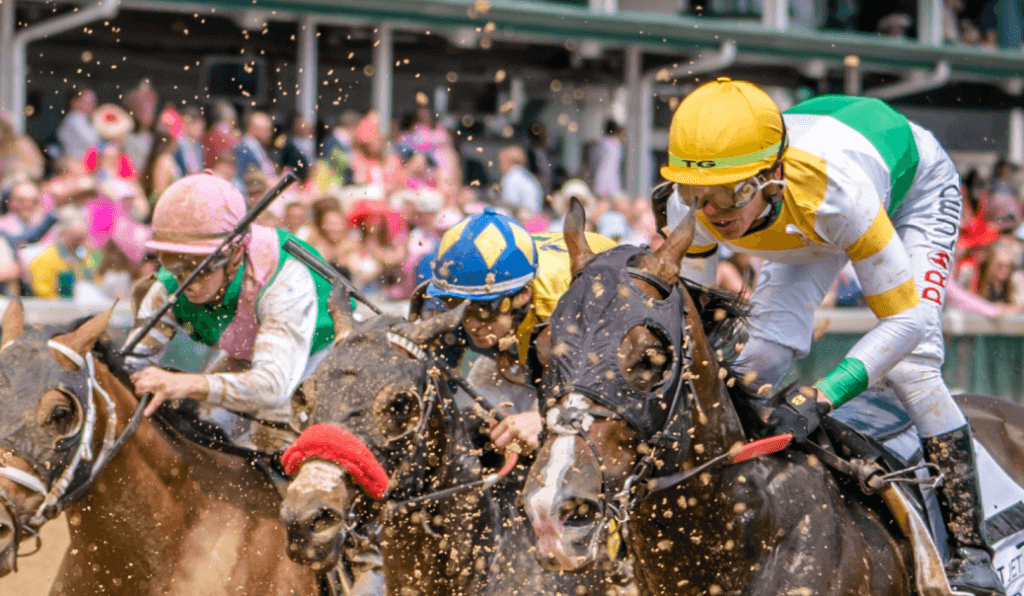
Calling All Derby Enthusiasts to Post
The Road to the 152nd Kentucky Derby is underway! Submit your email and receive newsletters for all things Kentucky Derby directly to your inbox.
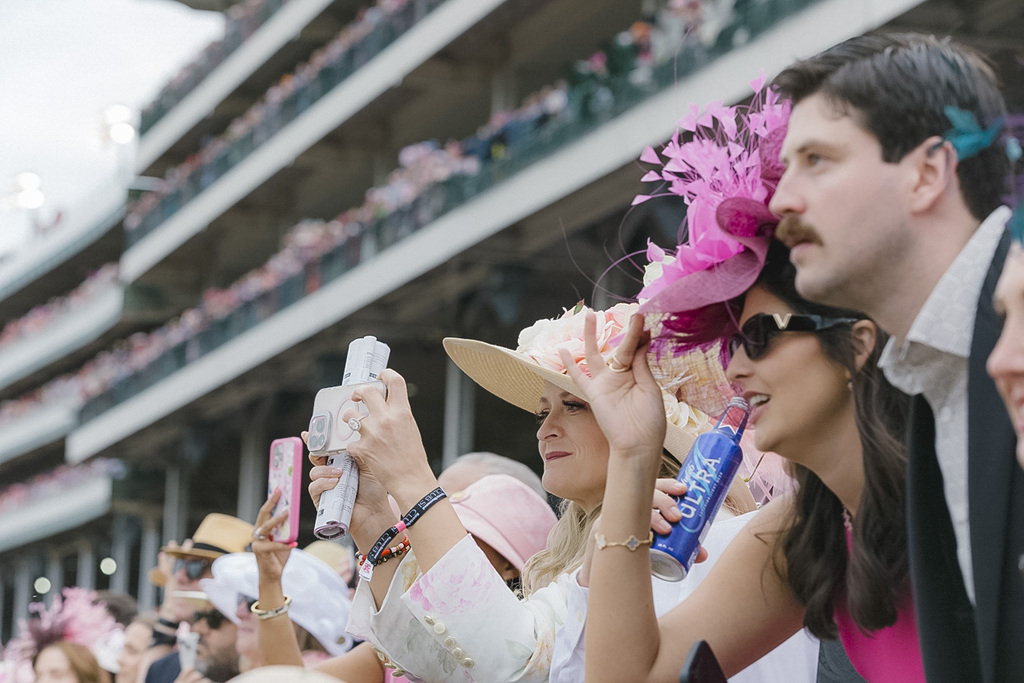
This Is Your Moment
The fashion. The roar. The roses. Only select ticket options remain for Kentucky Derby 152. Be part of the story. Buy today or connect with our sales team for premium options and personalized service.
Get in Touch with the Kentucky Derby Team
Contact us via email or phone
Email: sales@kyderby.com | Phone: (502) 636-4447
All 2-day ticket packages are currently available for purchase. By filling out this form, a member of our team will reach out to help you decide which section is best for you and help you complete your purchase