Did you know: Iroquois Stakes honors history-making colt
Sep 07, 2026
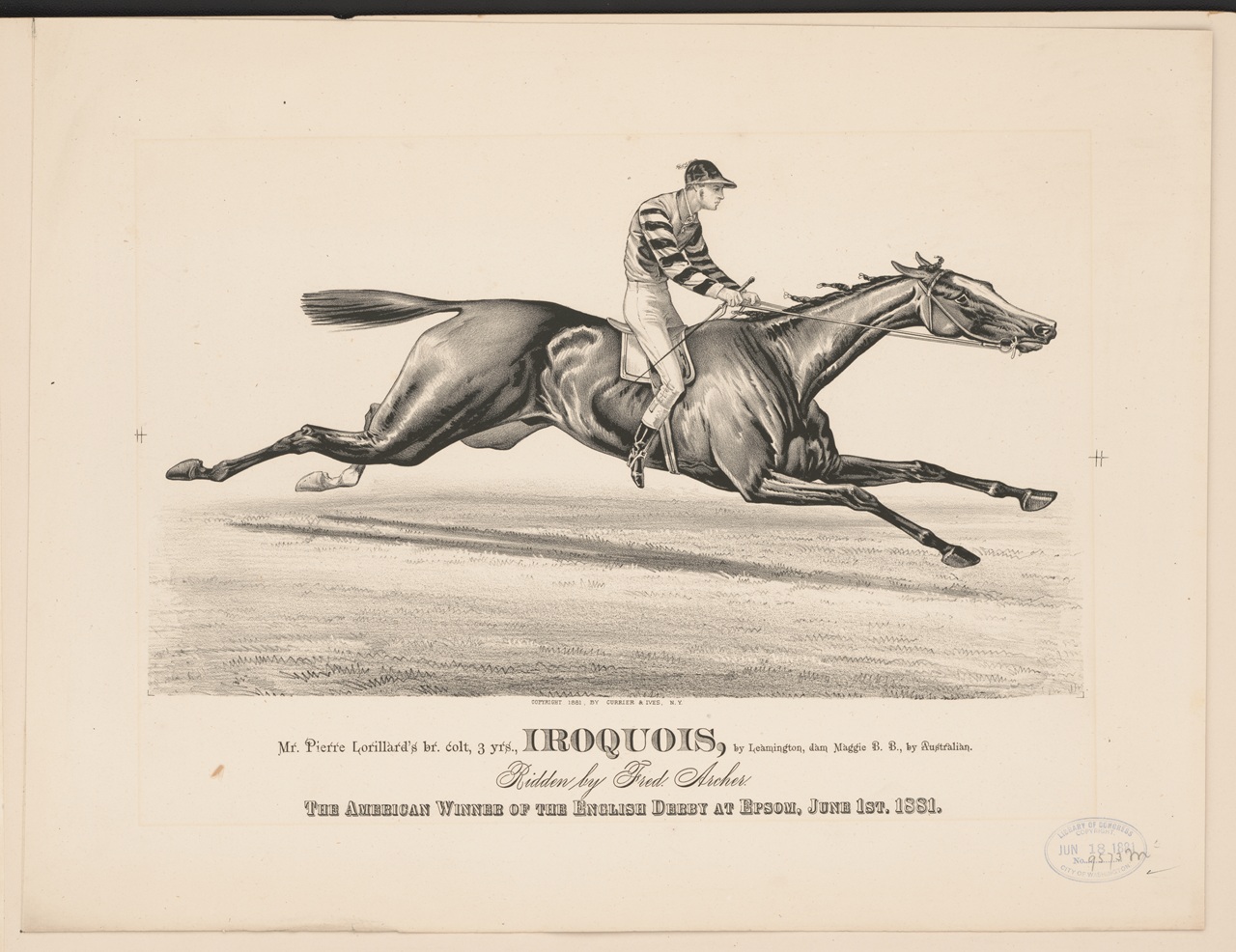
Iroquois portrayed in a lithograph by Currier & Ives (Courtesy of Library of Congress via Wikimedia Commons)
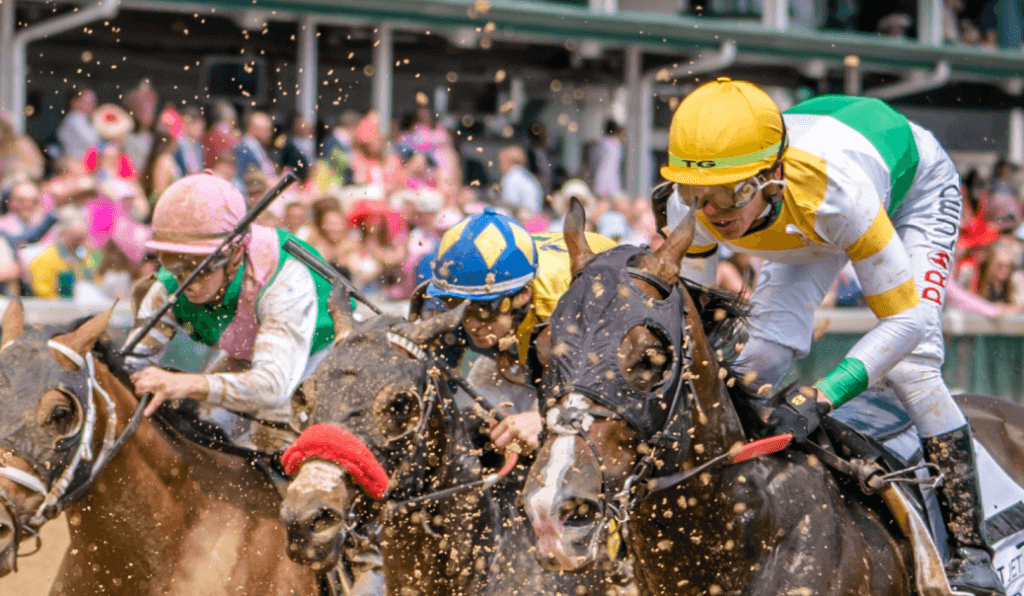
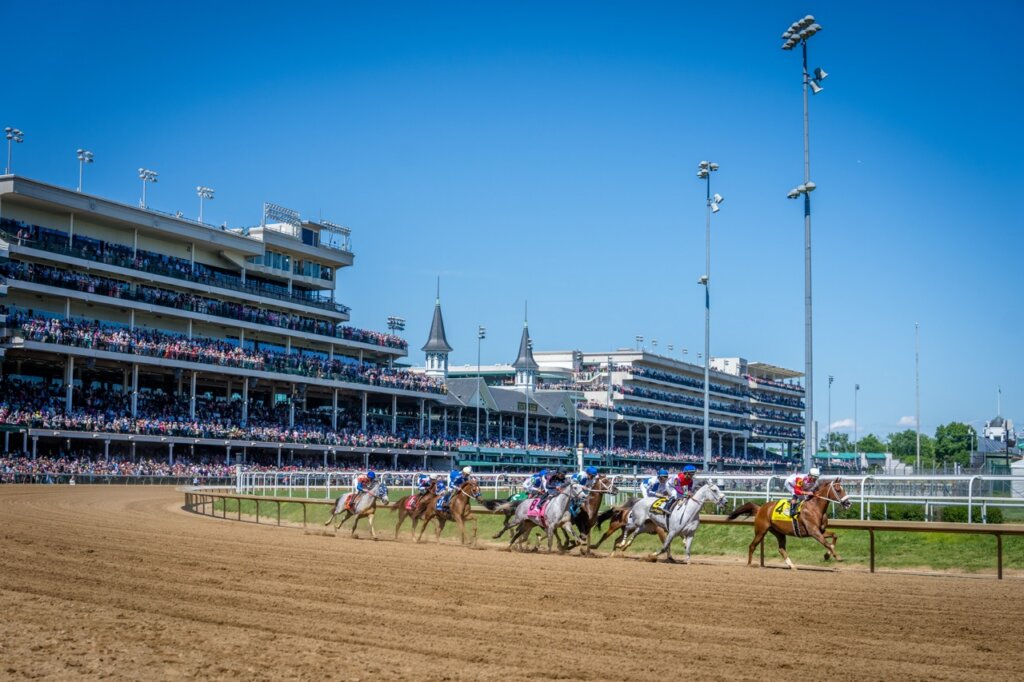
The Road to the Kentucky Derby formally begins on Saturday with the Iroquois (G3), held at the home of the Kentucky Derby (G1), historic Churchill Downs.
The Iroquois is the first qualifying race leading up to the first Saturday in May. Over the course of the entire series, aspiring contenders have opportunities to earn points and hopefully collect enough to make the Derby field.
It’s fitting that the Road to the Derby comes full circle, both starting and ending at Churchill Downs. But the Iroquois itself is deeply symbolic as the kickoff event, pointing to the original inspiration behind the Kentucky Derby while honoring a history-making colt.
The Iroquois is named after the first U.S.-bred winner of England’s famed Derby at Epsom in 1881. Inaugurated in 1780, the Epsom classic was the first “Derby” in racing history. Ever since, it’s given rise to other classic races for three-year-old Thoroughbreds around the world, including the Kentucky Derby, and the very name of Derby has become a byword.
Iroquois, the horse, also has connections to the first Kentucky Derby winner, Hall of Famer Aristides (1875). Both colts were by the same sire, British import *Leamington (the asterisk is the old style of denoting importation). Moreover, Aristides Welch bred Iroquois, the namesake of the colt Aristides.
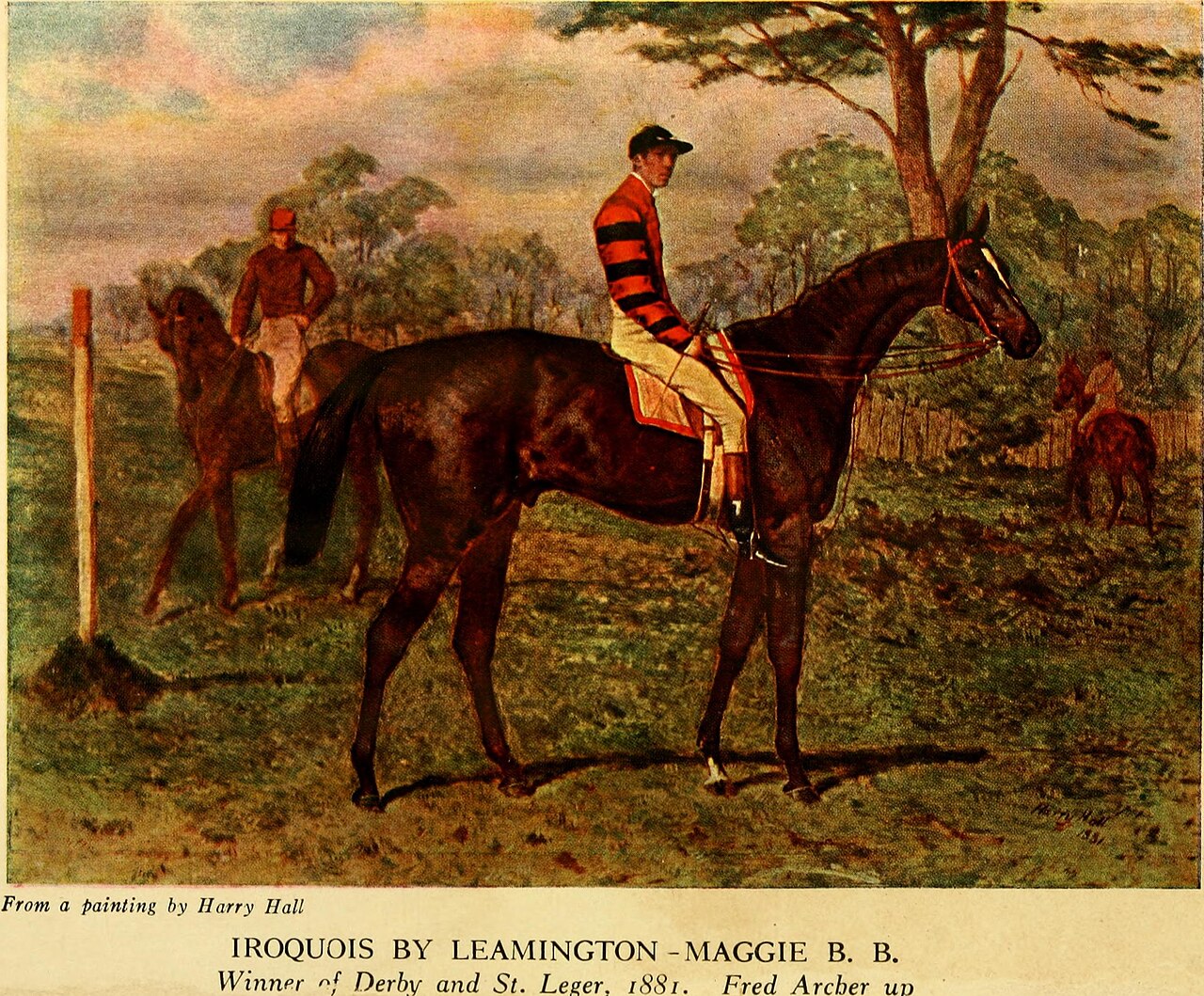
Iroquois in a painting by Harry Hall, published in Sport on Land and Water, Recollections by Frank Gray Griswold (Flickr via Wikimedia Commons)
Although Iroquois hailed from Pennsylvania, he was out of a blueblood mare from the heart of Bluegrass country. His dam (mother), the prolific producer Maggie B.B, was herself a granddaughter of the influential American matron, Magnolia.
Magnolia was a gift from Dr. William Mercer of New Orleans to the great Kentucky statesman, Henry Clay. Residing at his Ashland estate, Magnolia left a profound legacy through her daughters. She was dubbed “Empress of the Stud Book,” according to Kentucky Bloodlines: The Legacy of Henry Clay, and Clay’s own descendants cultivated the female line in ensuing generations, including Maggie B.B.
Iroquois was sold as a yearling to Pierre Lorillard, a tobacco magnate with a powerful stable based on the East Coast. Interestingly, his brother, George, bought a filly from Welch’s same crop of yearlings. That filly would become the star juvenile of 1880 – Spinaway, who is commemorated by the Grade 1 stakes at Saratoga for two-year-old fillies.
Long before Spinaway became famous, Iroquois had already been shipped across the Atlantic. Pierre Lorillard had the idea to train him in England, fresh off the success he’d had there with his six-year-old veteran, Hall of Famer Parole.
Another Welch-bred by *Leamington, Parole invaded England in 1879. The British wags derided him as the “Yankee mule,” but Parole put them in their place by scoring several notable victories. Toppling the great Isonomy at Newmarket, Parole won two of Epsom’s valuable handicaps, the City and Suburban and Great Metropolitan, on back-to-back days!
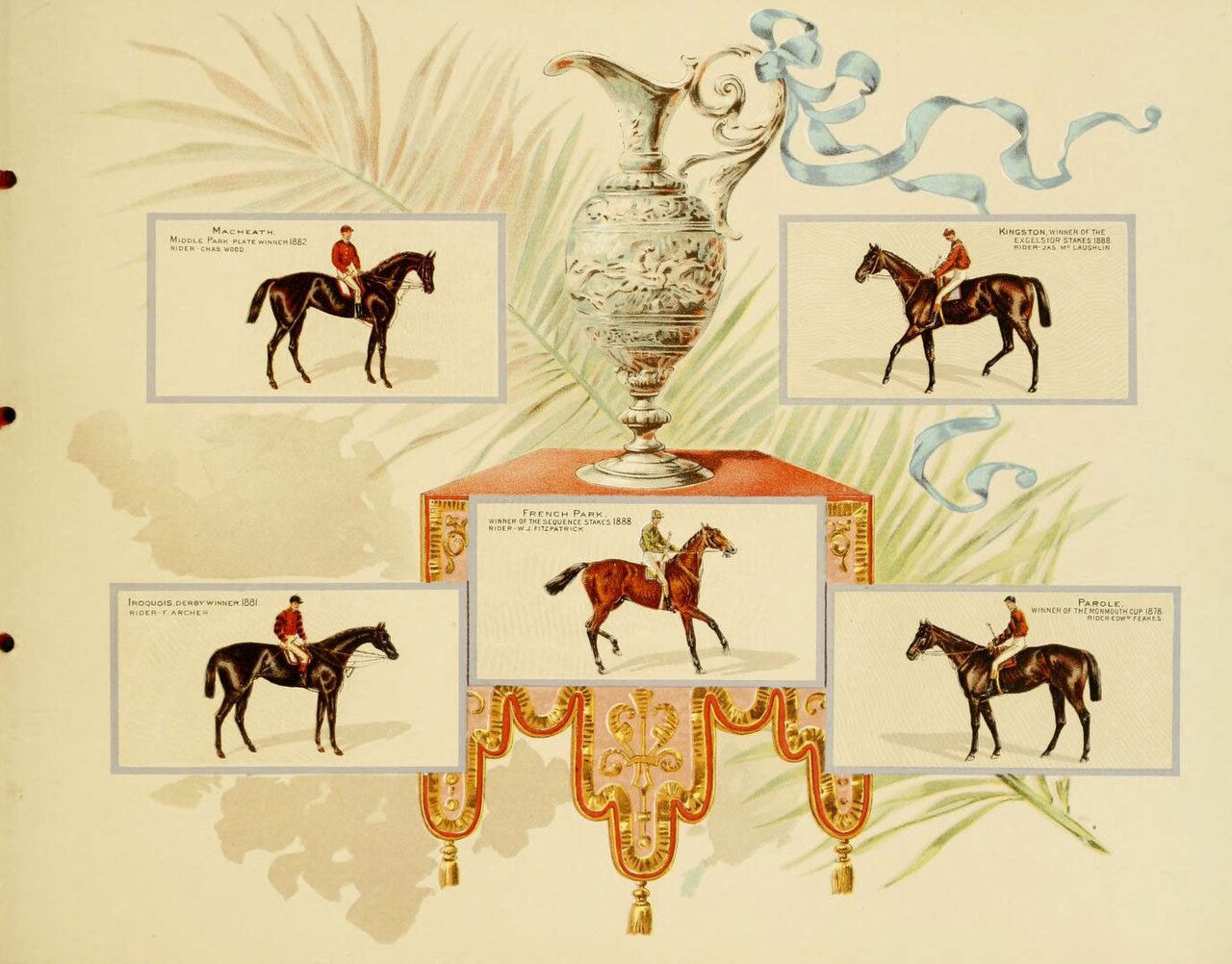
Iroquois and Parole are in the bottom row (left and right, respectively) in this image from the Album of Celebrated American and English Running Horses (Flickr via Wikimedia Commons)
Parole remained in the care of American trainer Jacob Pincus, now ensconced in his English outpost. He likewise prepared Iroquois for his trailblazing career.
Pincus’s methods appeared strange and novel in the traditional environs of Newmarket, especially his use of the stopwatch to time workouts. But the American training model was vindicated by results on the racecourse.
After a promising juvenile season in 1880, winning four of 12 starts, Iroquois was a terrific runner-up in the first classic of the 1881 season, the 2000 Guineas at Newmarket. He wasn’t fully tuned up yet, with Pincus deliberately using it as a prep for the Derby. His effort caught the eye of the legendary jockey Fred Archer, who wanted to ride Iroquois at Epsom.
Archer accordingly picked up the mount aboard Iroquois, and he delivered a perfectly timed ride in the Derby, then held on the first Wednesday in June. Sent off at odds of 11-2, the American colt unleashed a sparkling turn of foot to collar Peregrine.
Iroquois was described as “greased lightning” in a contemporary newspaper account (accessible online in images of the Cleveland Leader from June 2, 1881), which noted that Archer’s popularity made for memorable scenes:
“Jockey Archer, who rode Iroquois, received a tremendous ovation upon returning to weigh in…It is stated on the race course that jockey Archer says he could easily have won the race by three lengths if it had been required.”
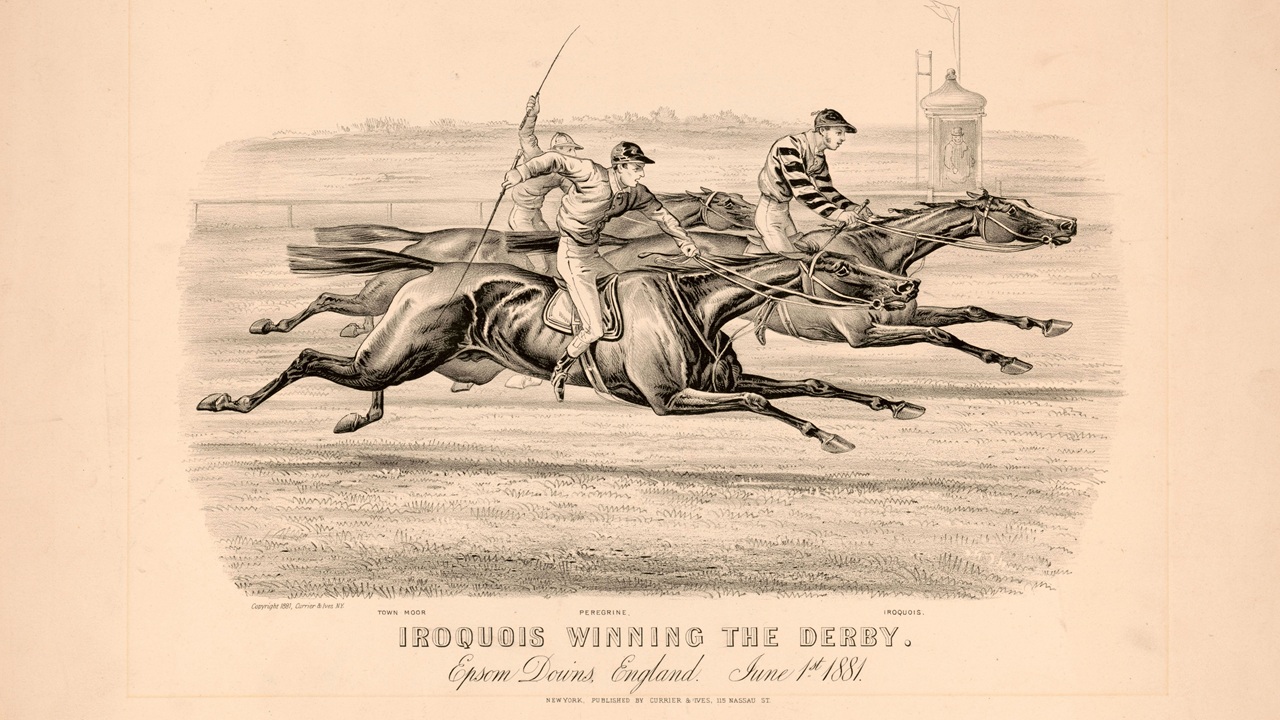
Iroquois (right) gets up to beat Peregrine in the 1881 Epsom Derby, as depicted in a Currier & Ives lithograph (Courtesy of Library of Congress via Wikimedia Commons)
If Epsom racegoers reacted enthusiastically, New York went wild the instant the news was relayed via telegraph. As racing historian Michael Church recounts, the message was dispatched in coded form – IROPERTOW – to signify the first three finishers. America’s own Iroquois had beaten Peregrine and Town Moor.
The New York Stock Exchange briefly suspended trading, as Wall Street was transported into a state of “joyous bedlam,” in the memorable phrase of Roger Longrigg (History of Horse Racing, p. 226). Lorillard was mobbed by well-wishers at the Union Club and on the way to Jerome Park for the Wednesday racing. Aside from the glory of winning the Derby, Lorillard also pulled off a betting coup. He had wagered on his colt far in advance, reportedly in his yearling days.
“An Englishman said this victory did more for the United States in British public opinion than anything accomplished in letters, arts, or arms,” wrote Ed Hotaling (They’re Off: Horse Racing at Saratoga, p. 168).
And Iroquois was not done yet. He added a pair of major races at Royal Ascot, the Prince of Wales’s and St James’s Palace; the Newmarket Derby; and the world’s oldest classic, the St Leger, which celebrates its 250th anniversary in 2026.
By winning the Derby and St Leger, Iroquois captured two-thirds of the English Triple Crown. If he’d been primed for the first jewel, the 2000 Guineas, might he have swept it?
The remainder of Iroquois’s career was anticlimactic, but he did win the 1883 Stockbridge Cup and placed in Royal Ascot’s Hardwicke S.
Iroquois entered stud at Lorillard’s Rancocas property in New Jersey. When Lorillard dispersed much of his stock at auction in 1886, Iroquois went to Gen. William Jackson for $20,000.
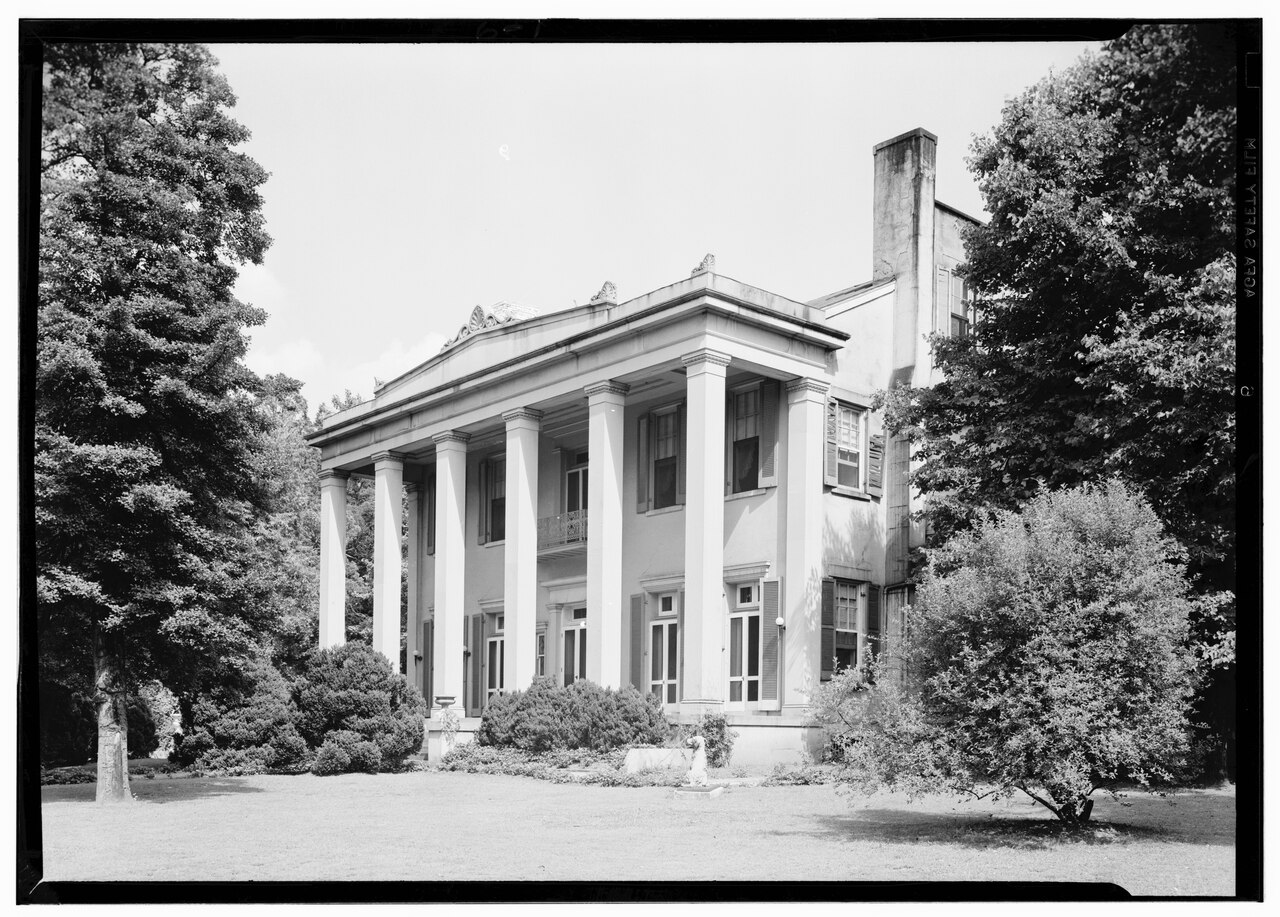
Iroquois became a leading sire at Tennessee's historic Belle Meade (Photo by Lester Jones courtesy of Library of Congress via Wikimedia Commons)
Iroquois settled into his new home at Belle Meade in Tennessee, where he ranked as the nation’s leading sire in 1892. That year, his outstanding son Tammany racked up several important wins, including the Realization S., Withers S., Jerome S., and, poignantly, the Lorillard S. Another son of Iroquois, Huron, was second in the 1892 Kentucky Derby, and Iroquois also sired a Kentucky Oaks winner in White Frost (1897).
Iroquois’s own exploits on the racecourse were well known to his Tennessee neighbors. Liz Martiniak includes this telling anecdote on tbheritage.com:
“A young boy named Lee Roy Jordan recalled years later, ‘When Iroquois was brought in people stood around and sung songs. They hollered and they yelped. They made up one song to the tune of Casey Jones, telling how Iroquois had whipped the British.’”
The memory of his achievements has endured in his adopted home state. When a steeplechase course was established at Nashville’s Percy Warner Park, the founders created a race in his honor in 1941. Every year, Iroquois is feted with a Grade 1 steeplechase on the second Saturday in May.
Churchill Downs commemorated Iroquois with its own stakes race in 1982, paying tribute to the classic winner who put American breeding on the map.
Iroquois stood alone in the Epsom annals until 1954, when Never Say Die became the second U.S.-bred winner of the Derby. The floodgates opened after Sir Ivor’s brilliant victory in 1968, presaging a golden era for American-breds at Epsom.
The 21st century has seen far fewer Derby winners from this side of the pond. But the most recent, Kentucky-bred City of Troy (2024), is a son of U.S. Triple Crown champion Justify, reinforcing the transatlantic bonds between Churchill Downs and Epsom.
One might say that American-bred winners of the original Derby are, in a certain sense, the heirs of Iroquois. Peter Willett summed it up well in The Classic Racehorse (pp. 110-11):
Iroquois “heralded the arrival of the American horse as a leading player on the international racing stage,” and “proved conclusively that American horses were as capable of excellence as any in the world.”
FOLLOW FOR UPDATES AND EXCLUSIVES
Missed something? Catch up on past Kentucky Derby news
Book Your Premium Experience
For Premium tickets, give us a call at 5026364447