

Did you know: Secretariat tops list of great Virginia-breds
Mar 10, 2026
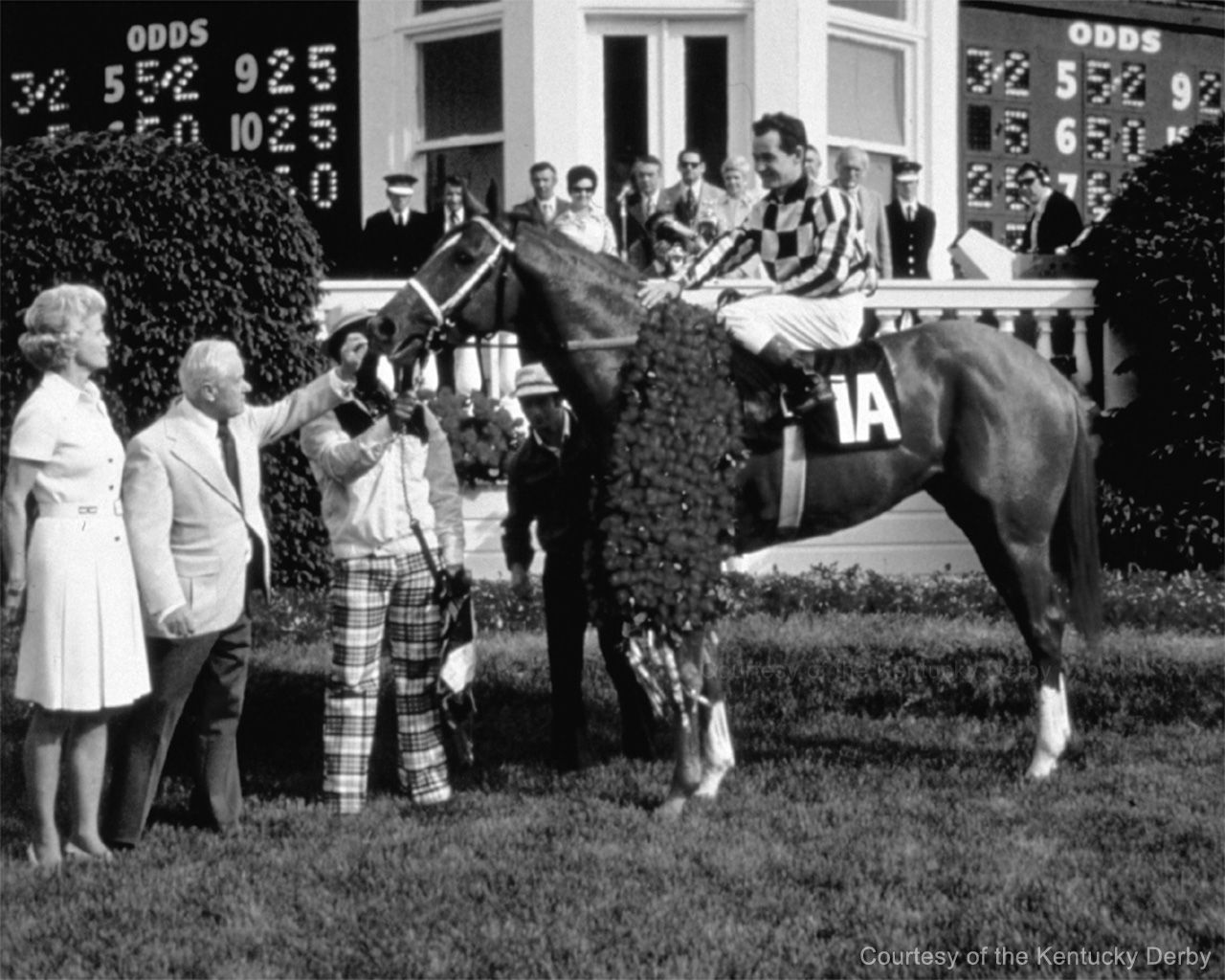
Secretariat is one of four Kentucky Derby winners born in Virginia (Courtesy of the Kentucky Derby/Churchill Downs)
Secretariat, the all-time great Triple Crown winner, was so famous that he transcended the bounds of sports and became a household name among the general public.
But did you know that arguably the greatest racehorse in American history was not born in the Bluegrass of Kentucky? Secretariat was born and raised in Virginia.
That might come across as a plot twist. After all, Kentucky is virtually synonymous with the Thoroughbred racing and breeding industry. Yet long before the rise of the Bluegrass State, Virginia was already nurturing the Thoroughbred from colonial days.
You might say that Virginia was the cradle of American horse racing, as well as the “Mother of Presidents.” It’s a historically poetic touch that the Commonwealth also produced a modern-day legend in Secretariat.
In honor of Saturday’s Virginia Derby, a Road to the Kentucky Derby scoring race at Colonial Downs, it’s an opportune time to highlight Virginia’s tapestry of racing history.
Secretariat: Crowning legacy of The Meadow
Secretariat was a homebred for Christopher Chenery’s Meadow Stud near Doswell, which is now listed on the National Register of Historic Places. Chenery’s racing colors paid homage to his own Virginia roots, inspired by the blue and white of the fraternity Phi Delta Theta during his college days at Washington and Lee.
Nicknamed “Big Red,” Secretariat swept the 1973 Triple Crown while setting records in all three jewels. After winning the Kentucky Derby (G1) in 1:59 2/5, still a track record for 1 1/4 miles at Churchill Downs, he added the 1 3/16-mile Preakness (G1) at Pimlico in 1:53 – still the fastest time ever in the middle jewel. Secretariat’s 31-length conquest of the Belmont (G1) remains one of the most spectacular performances in the centuries-long history of the breed, as he blitzed 1 1/2 miles in 2:24 (a world record on dirt).
Secretariat fulfilled the Derby dreams that eluded his older half-brother, Sir Gaylord. Favored for the 1962 Run for the Roses, Sir Gaylord unfortunately had to scratch.
Chenery previously had two other Virginia homebreds place in the Kentucky Derby: Hall of Famer Hill Prince (second in 1950) and First Landing (third as the favorite in 1959). First Landing, named after the historic settlement of Jamestown, would go on to sire Meadow Stable’s Kentucky-bred Derby and Belmont star, Riva Ridge.
Other Virginia-bred Derby winners
Secretariat is the most celebrated of the four Kentucky Derby winners who were bred in Virginia. But the first, Reigh Count (1928), was a Hall of Famer himself.
Reigh Count was bred by Willis Sharpe Kilmer at Court Manor Stud in New Market, which amazingly furnished another Hall of Famer, Sun Beau, in the same crop. Although Sun Beau was only 11th behind Reigh Count in the Kentucky Derby, he blossomed with age and, for a time, reigned as America’s richest racehorse.
Reigh Count compiled a superb resume as the U.S. Horse of the Year in 1928. His English campaign in 1929 elevated his historic profile, for he captured the Coronation Cup at Epsom Downs, home of the original “Derby.” At stud, Reigh Count sired Count Fleet, hero of the 1943 Triple Crown.
This #EpsomDerby week marks the 90th anniversary of Reigh Count's victory in the Coronation Cup (G1). @VPHanson has the story on how the @KentuckyDerby winner conquered legendary @EpsomRacecourse https://t.co/WMp7fcVKnL (Sport and General photo) pic.twitter.com/rHjKcenrjY
— TwinSpires Racing 🏇 (@TwinSpires) May 28, 2019
The most recent Virginia-breds to wear the Derby roses were connected to the Mellon family. Champion Pleasant Colony (1981) was a homebred for Thomas Mellon Evans’ Buckland Farm in Gainesville. Evans was a distant cousin of Paul Mellon, who completed a rare transatlantic double with Sea Hero (1993), a homebred from his Rokeby Farm in Upperville.
Mellon’s legends and more Hall of Famers
Mellon joined an ultra-exclusive club of owners who have won both the Kentucky Derby and the Epsom Derby (G1). His victory at Epsom came first, in 1971, courtesy of Virginia homebred Mill Reef. One of the all-time greats to grace the European turf, Mill Reef also landed the Eclipse (G1), King George VI & Queen Elizabeth (G1), and Prix de l’Arc de Triomphe (G1) during his stellar three-year-old campaign.
Mellon’s Rokeby Stables nearly had another Kentucky Derby winner in Hall of Famer Arts and Letters. Runner-up to Majestic Prince in the 1969 Derby and Preakness, Arts and Letters gained revenge by denying him a Triple Crown sweep in the Belmont. Moreover, Arts and Letters went on to take the three-year-old championship title and Horse of the Year.
Fellow Mellon homebred Fort Marcy, a champion in the same era, would ultimately join Arts and Letters in the Hall of Fame. A redoubtable turf campaigner, Fort Marcy was voted Horse of the Year for 1970 in the Daily Racing Form poll (before the Eclipse Awards were established to prevent split decisions).
Another historic Upperville nursery, Brookmeade, produced Hall of Famer Sword Dancer. Brookmeade’s proprietor, Isabel Dodge Sloane, has the distinction of being the first woman to top the owners’ standings in a single season. That breakthrough came in 1934, when her New Jersey-bred Cavalcade won the Kentucky Derby and ranked as Horse of the Year.
Sloane’s Virginia homebred, Sword Dancer, was an even better Horse of the Year in 1959, turning the Belmont/Travers double and defeating older horses in several major contests. Sword Dancer was arguably unlucky in the Kentucky Derby, where he missed by a nose in a scrimmaging match. Jockey Bill Boland claimed foul against the winner, *Tomy Lee, but the stewards allowed the result to stand.
Virginia also boasts a Hall of Fame racemare, Shuvee, who once held the all-time record for earnings by a female. Bred by Whitney Stone’s Morven Stud, listed on the National Register of Historic Places in Charlottesville, Shuvee swept the New York series that used to constitute the Fillies’ Triple Crown. Her unique achievement is beating males in the Jockey Club Gold Cup, then a two-mile test, and she did it twice (1970-71). No other filly or mare has done it before or since.
Today the G3 Shuvee Stakes runs at Saratoga Race Course. The only filly ever to beat males in the 2-mi Jockey Club Gold Cup, Shuvee did it 2x, in 1970&71, &was voted champion filly or mare both years. More:https://t.co/P9814GCcEP
📸Shuvee in the winner's circle, Museum Collection pic.twitter.com/iuCgoEAkBJ— National Museum of Racing and Hall of Fame (@nmrhof) July 25, 2021
Great steeplechasers
Given Virginia’s rich history of hunt clubs and the natural association of hunting with steeplechase racing (over the jumps), it’s no surprise that the Commonwealth has excelled in this discipline as well.
Two Virginia-bred steeplechasers are enshrined in the Hall of Fame, Neji and Bon Nouvel. Each was honored as champion steeplechaser three times: Neji in the 1950s and Bon Nouvel in the 1960s.
Neji was bred by Marion duPont Scott, “America’s First Lady of Racing,” at Montpelier. She graciously bequeathed Montpelier, formerly the estate of President James Madison, to the National Trust for Historic Preservation. Neji attained historic stature himself by amassing then-record earnings for a steeplechase horse.
Bon Nouvel was a homebred campaigned by another grande dame, Theodora Randolph, who married into one of the Commonwealth’s most prominent families. A niece of Gen. George Patton, she was dubbed “First Lady of the Hunt.”
Virginia-bred Tingle Creek became a jumping star in England in the 1970s. Mrs. Wallace Whittaker’s homebred was so popular that a Grade 1 race is named after him at his beloved Sandown.
Colonial beginnings and breed-shaping stallions
Interestingly, Tingle Creek’s sire, Goose Greek, was a maternal relative of Mill Reef. Their success on the British turf could be described as a case of coming full circle, the Virginia-bred descendants of past imports returning to their ancestral homeland.
Virginia was the destination of early Thoroughbred imports to North America. Bulle Rock, a son of the foundation sire known as the Darley Arabian, is often cited as the first stallion to arrive in 1730. But he apparently made no lasting impact.
Much more consequential were a pair of grandsons of another foundation sire, the Godolphin Arabian.
Janus, imported in the 1750s, was known for transmitting high speed to his progeny. Thus, he also became a key progenitor of the American Quarter Horse.
In the 1760s, Fearnought exerted a colossal influence on the development of the American Thoroughbred through his daughters. His legacy endures to this day, despite the fact that many of his offspring were casualties in the Revolutionary War. Fearnought was so prized as a stallion that he was reportedly nicknamed “Patriot’s Choice.” Thomas Jefferson’s most documented mount, Caractacus, was a grandson of Fearnought.
Diomed, the first Epsom Derby winner, was imported to Virginia in 1798, at the advanced age of 21, and promptly became a game-changer. From the male line of another foundation sire, the Byerley Turk, Diomed was responsible for establishing the sire line culminating in the breed-shaping Lexington.
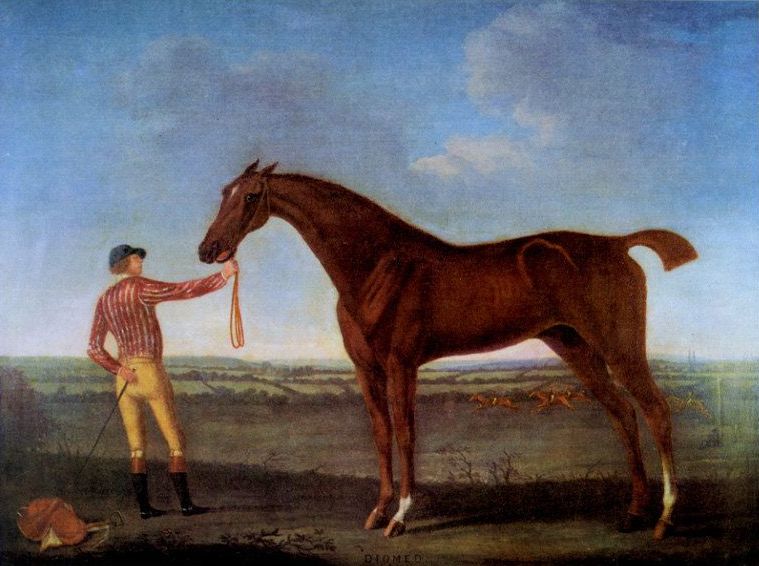
Diomed, by John Nost Sartorius (Courtesy of Wikimedia Commons)
The genetic thread running from Diomed to Lexington includes Virginia-bred legends Sir Archy and Boston. Diomed sired Sir Archy, the first U.S.-produced supersire and a charter member of the Hall of Fame. Sir Archy’s grandson, the great but ill-tempered Boston, joined him in that first Hall of Fame induction in 1955. But Boston’s exploits on the racetrack are overshadowed by his legacy at stud, his Kentucky-bred son Lexington.
Virginia’s other 19th-century Hall of Famer, Planet, bankrolled record earnings on the eve of the Civil War. “The Great Red Fox” might well have racked up an even higher total if not for the outbreak of hostilities that ended his career.
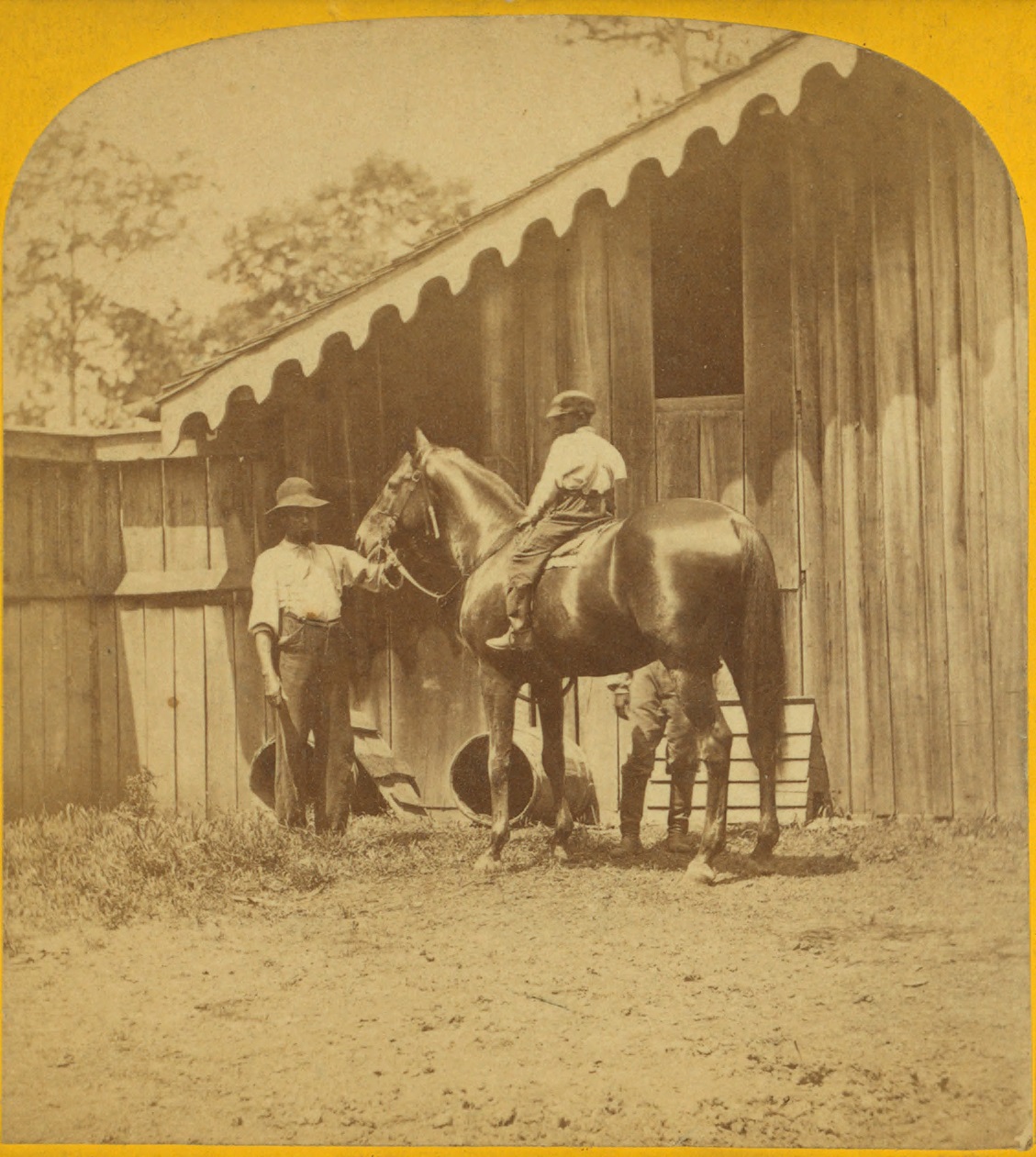
Planet, a 19th-century Hall of Famer (Photo by James Mullen/Wikimedia Commons)
Planet was a homebred for Maj. Thomas Walker Doswell’s Bullfield Farm. The Doswells were associates of Richard Hancock of Ellerslie Farm in Charlottesville.
Richard’s son, Arthur, would set up his own establishment in Kentucky – Claiborne Farm, which became the new home for a good portion of the Doswell bloodstock. Further in the future, Claiborne would also be the home of Secretariat’s sire, Bold Ruler, and “Big Red” himself once he retired to stud.
But there’s a closer link between Big Red and The Great Red Fox. Chenery was a cousin of the Doswells by marriage, and he used to ride the horses at Bullfield. When he became financially successful, he purchased a nearby property that had belonged to his forebear, Dr. Charles Morris. Chenery modeled his farm upon Bullfield. That farm was The Meadow, the birthplace of Secretariat.
Today in Thoroughbred Racing History, March 30, 1970: Secretariat was foaled at The Meadow, Doswell, Va. #TodayinTBRacingHistory pic.twitter.com/UmmuFKnhpg
— NTRA (@NTRA) March 30, 2025
FOLLOW FOR UPDATES AND EXCLUSIVES
Missed something? Catch up on past Kentucky Derby news
Book Your Premium Experience
For Premium tickets, give us a call at 5026364447
Calling All Derby Enthusiasts to Post
The Road to the 152nd Kentucky Derby is underway! Submit your email and receive newsletters for all things Kentucky Derby directly to your inbox.
This Is Your Moment
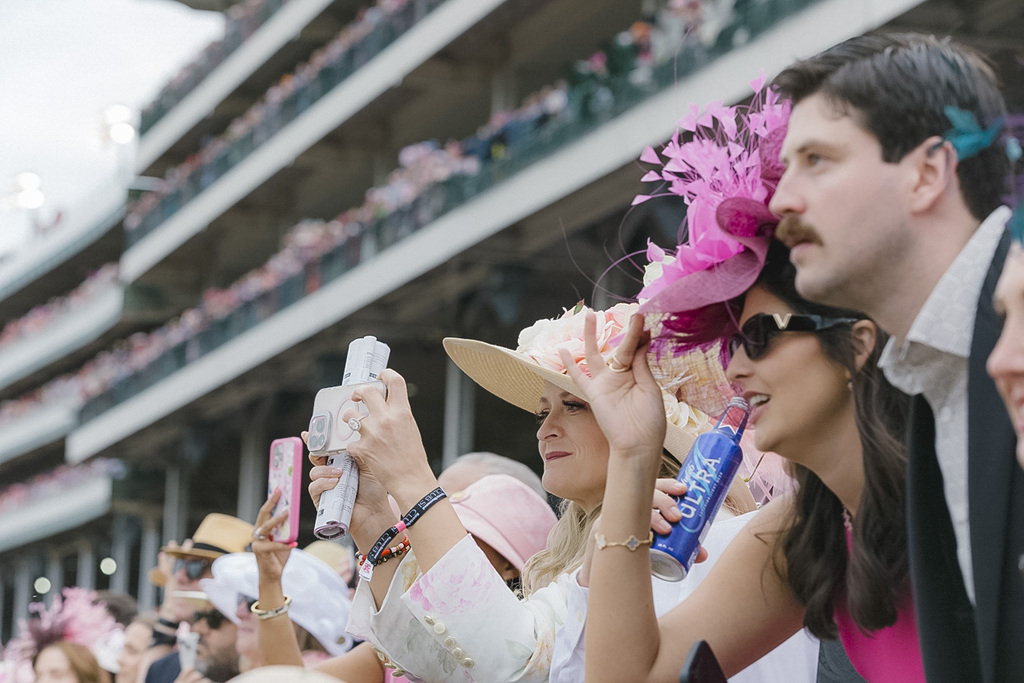
The fashion. The roar. The roses. Only select ticket options remain for Kentucky Derby 152. Be part of the story. Buy today or connect with our sales team for premium options and personalized service.
Get in Touch with the Kentucky Derby Team
Contact us via email or phone
Email: sales@kyderby.com | Phone: (502) 636-4447
All 2-day ticket packages are currently available for purchase. By filling out this form, a member of our team will reach out to help you decide which section is best for you and help you complete your purchase