Kentucky Derby Lucky Loser – Little Current (1974)
Jul 22, 2026
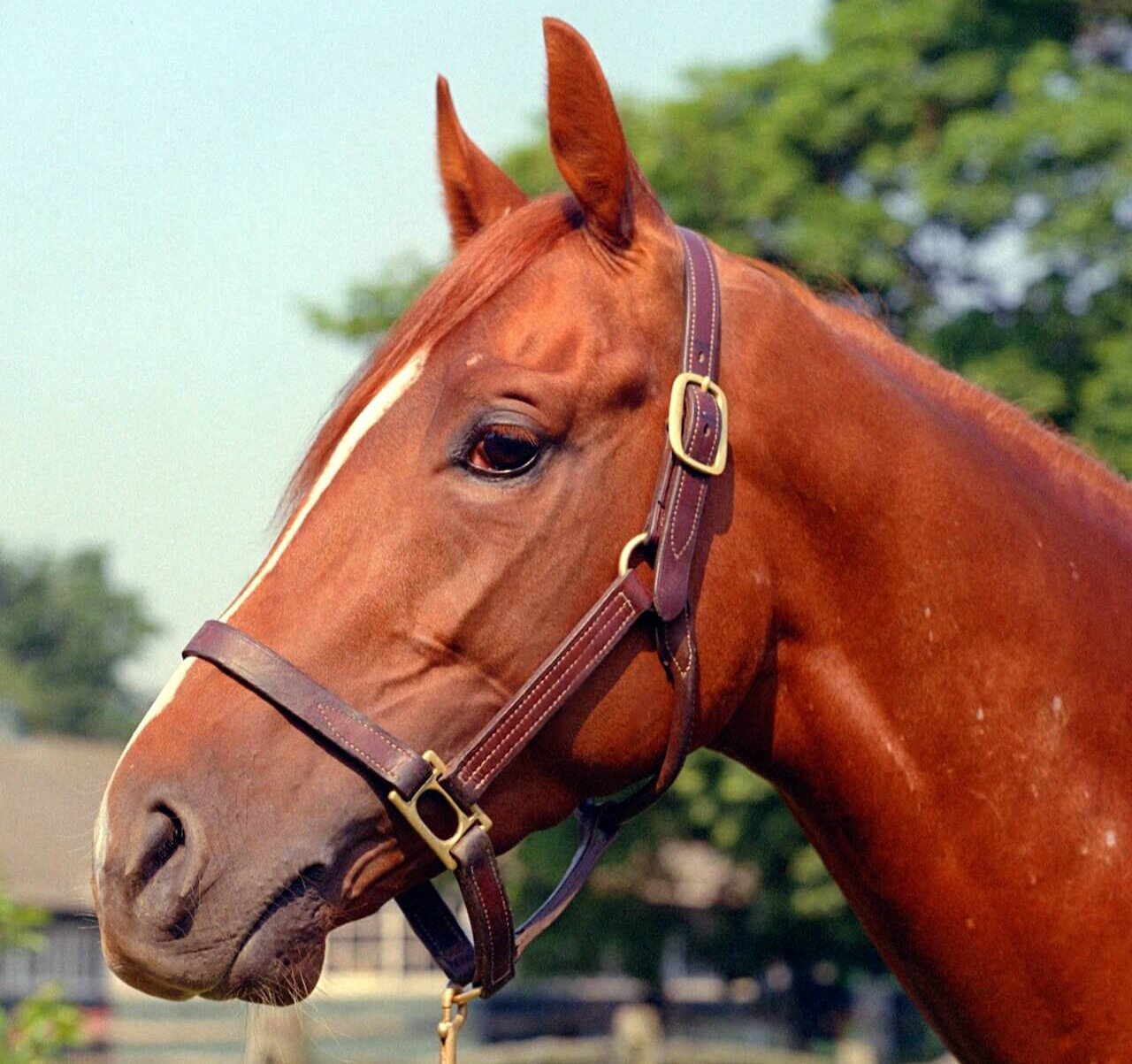
Little Current. (Photo by Coglianese Photo)
The year after Secretariat’s legendary run through the Triple Crown meant that 1974’s three-year-old crop had big shoes to fill. Who could thrill the crowds at Churchill, at Pimlico, and at Belmont in the same way? The answer lay in another chestnut colt, one clad in the fawn and brown of Darby Dan Farm, who parlayed his thrilling late-running style into victories on the sport’s biggest stage.
Though Little Current’s bid for the Kentucky Derby was not enough to score on the first Saturday in May, he was able to score classic victories and earn a championship in the process, a lucky loser in one of racing’s golden eras.
Rough Start
He was known as Sea-Bird in his native France and Sea-Bird II in the United States and England. Winner of the 1965 Epsom Derby and Prix de l'Arc de Triomphe champion, Sea-Bird and his record of seven wins in eight starts landed in the Bluegrass for stud duty at Darby Dan Farm after his three-year-old season concluded. John Galbreath leased the young stallion for five years and then extended that contract for two more one-year terms, in the process sending his own mares to this classic winner.
One of these was Luiana, a daughter of My Babu, the 1948 Two Thousand Guineas victor, and Banquet Bell, the mare who had produced one of Darby Dan’s Derby winners, Chateaugay. Then on April 5, 1971, she foaled a chestnut colt with a narrow stripe of white down his face and socks on his left front and right hind legs, whom Galbreath would name Little Current, after the community on Manitoulin Island, Ontario, Canada where the family had a summer retreat.
To prepare the colt for the racetrack, Little Current went to Thomas L. ‘Lou’ Rondinello, Darby Dan’s private trainer. A native of Harrison, N.Y., Rondinello served in the U.S. Army in Japan for two years and then opened a public stable upon his return to the United States. In 1959, he joined Darby Dan as an assistant to head trainers like Jim Conway, Bob Gentry and Dave Erb, and then became the farm’s head trainer in 1970. He pointed the son of Sea-Bird to a debut in late July 1973, a six-furlong maiden special weight at Aqueduct. With Angel Cordero, Jr., in the saddle, he was keen early and took the lead within the first quarter of a mile before giving way to finish third.
Rondinello sent Little Current to Saratoga for another maiden try, this time at Saratoga. Once again, with Cordero in the saddle, the blinkered colt was keen early and then faded late, finishing fifth. The trainer removed the hood, and in his next start, Little Current finished second at Aqueduct and then broke his maiden in his last race of 1973. In shedding the blinkers, the trainer had unlocked a new running style, where he rallied from far back late.
As the distances got longer, though, that style presented challenges of its own.
Good Timing
Little Current took the Florida route to the first Saturday in May, starting with the seven-furlong Hutcheson Stakes at Gulfstream Park. Thirteenth early, he rallied late to finish fourth. The Fountain of Youth was more of the same, as was the Florida Derby, where he finished fifth behind stablemates Judger and Cannonade. A victory in the nine-furlong Everglades at Hialeah stamped him as a possible Derby contender, but then a fourth in the Flamingo and then a fourth in the Blue Grass Stakes took a bit of the wind out of his sails as the first Saturday in May approached.
A year after Secretariat’s record-breaking performance, the 100th Kentucky Derby featured a formidable field of 23 horses, a veritable cavalry charge as horses jockeyed for position out of the gate. Little Current was without Cordero, who had been replaced by Miguel Rivera in the Blue Grass. Both were committed to other horses, most notably Cordero to Cannonade, trained by Woody Stephens, and Rivera to Rube the Great. Bobby Ussery took the call on the Darby Dan hopeful, who was to break from post 10. The jock already had a Derby to his credit, winning on Proud Clarion in 1967, so he knew what to expect, but the 23-horse field was something else altogether. The best the late-charging Little Current could manage was fifth behind Cannonade.
Two weeks later, Rivera was back in the saddle for the Preakness Stakes, this time with an altogether more reasonable field of 13. Little Current broke from post 2 while Cannonade was toward the middle in post 6. Twelfth early, the Darby Dan colt made his move after the three-quarters mark, finding space on the rail to gun through to third behind Cannonade, who was trying to earn another jewel in the Triple Crown. Rivera gave him the cue, and he took off like a shot inside the final furlong to pass the Derby winner to win by seven lengths. This time, that one-run style did not let the son of Sea-Bird down.
Rondinello brought Little Current back to his home base in New York for the final classic, the Belmont Stakes. Cannonade was back to add to his resume, and Rivera was ready to follow up his ride in the Preakness with this next test. At 12 furlongs, the Belmont is 2.5 furlongs longer than the middle jewel, so timing Little Current’s one run was going to be imperative. Eighth of nine for the first mile, he came out of that sweeping final turn midpack and then poured on the speed in the stretch, putting Cannonade and the rest of the field away with ease. The margin of victory was again seven lengths, and the Darby Dan colt’s dual classic performances put him squarely at the top of the three-year-old colt division.
Close Calls
With the Triple Crown season over, team Little Current looked toward the second half of the season and those valuable sophomore stakes, including the Travers at Saratoga. Rondinello gave the Sea-Bird colt a break until early August, when he met a field of 10, including the up-and-coming gelding Holding Pattern, in the Monmouth Invitational Handicap. A winner of two of four in his juvenile season, including the Grade 1 Champagne Stakes, he had started his sophomore season in late July, winning the Grade 3 Ak-Sar-Ben President's Cup Handicap before heading east to Monmouth Park.
Little Current spotted the newcomer 10 pounds, which made the difference in a tight race. His one-run was too little, too late as he finished just a nose back of the gelding in the nine-furlong Grade 1 stakes.
The pair met again two weeks later in the ten-furlong Travers. The field also included Chris Evert, the filly Triple Crown winner, who would carry 121 pounds, as would Holding Pattern to Little Current’s 126. Afternoon rains left the track soggy as the field of 11 broke from the gate. The filly was forwardly placed early, taking the lead around the turn, when Holding Pattern asserted himself into the mix and took the lead in the stretch. Rivera and Little Current turned on their patented one-run inside the eighth pole, but it was not enough to overtake the gelding, and the Darby Dan horse finished just a head back in the Midsummer Derby.
Rondinello turned Little Current to turf in the 12-furlong Lawrence Realization at Belmont Park two weeks after just missing in the Travers. Rivera was aboard for this test, the son of Sea-Bird, who had scored his greatest victories in the green in Europe, trying the grass for the first time. If he ran well, Galbreath might send him to France for the Prix de l’Arc de Triomphe, a chance to follow in his sire’s footsteps. But that was not to be: Little Current finished sixth, dashing any hope of a trip to Europe.
Three days later, Rondinello announced the colt’s retirement. He had suffered a chip fracture of his right front ankle, an injury that put an end to his racing career. Little Current went on to stand at Darby Dan Farm, where he impressed Queen Elizabeth when she visited in 1984, and then moved to Buck Pond before turns in Louisiana and then Washington. He passed away in 2003.
FOLLOW FOR UPDATES AND EXCLUSIVES
Missed something? Catch up on past Kentucky Derby news
Book Your Premium Experience
For Premium tickets, give us a call at 5026364447